Government Camp
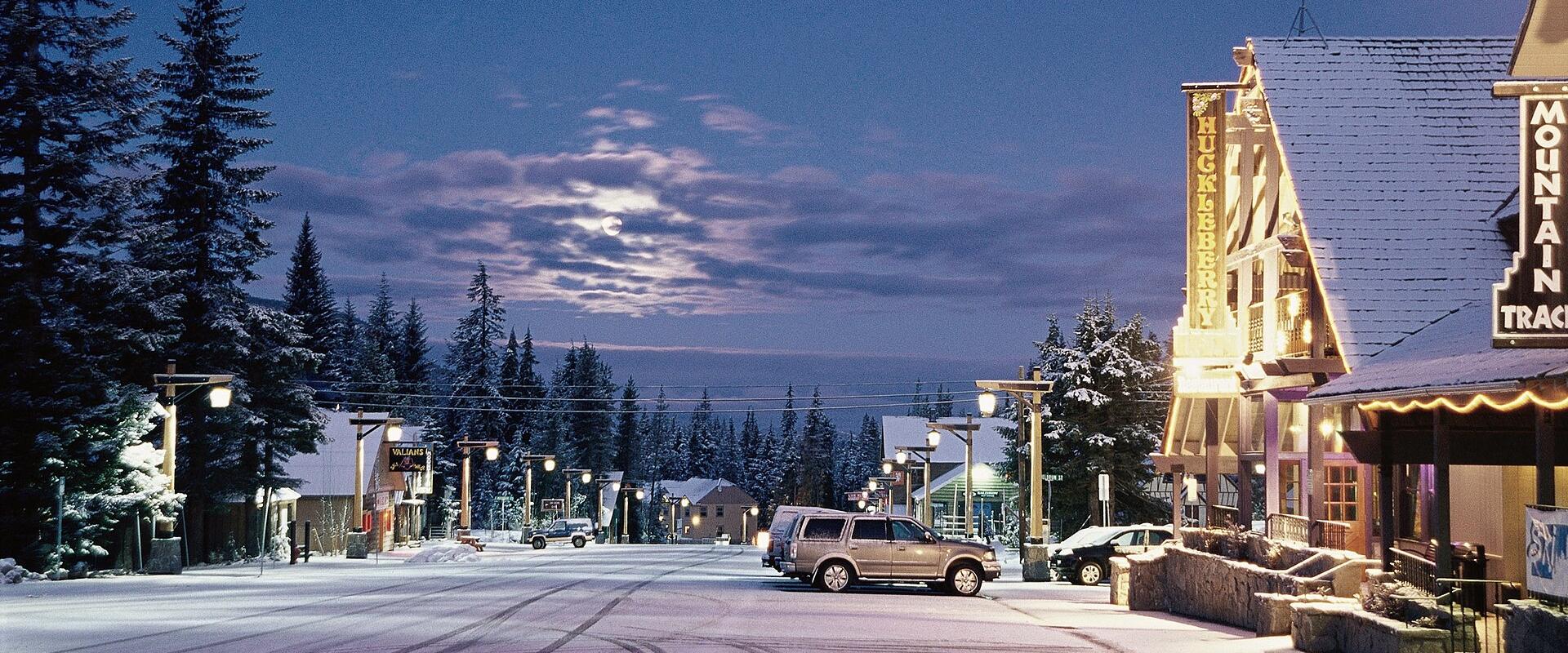
Mount Hood's village base for skiing, snowshoeing and summer hikes
History: The Barlow Road and a Village Named for Wagons
Long before skiing, the south side of Mount Hood was an obstacle. In 1846 Sam Barlow opened the Barlow Road, a toll road that gave Oregon Trail emigrants an overland alternative to rafting the dangerous Columbia River on the last leg of their journey to the Willamette Valley. In 1849 a regiment of U.S. Mounted Riflemen, struggling across the mountain, left wagons behind near the site of today's village, and settlers who later found them began calling the spot Government Camp. The name stuck, and a sign at the village post office still tells the story.
In the twentieth century the old wagon route gave way to the Mount Hood Highway, and Government Camp became the gateway to Mount Hood's ski slopes. Ski clubs and rope tows appeared on the surrounding hills in the late 1920s and 1930s, and in 1936 the Works Progress Administration began building Timberline Lodge on the mountain above the village. The lodge was dedicated by President Franklin D. Roosevelt in 1937, and it remains the region's best-known landmark. Government Camp itself has stayed small and unincorporated; residents voted down proposals to become a village or city in 2006 and 2010.
Skiing and Snowboarding
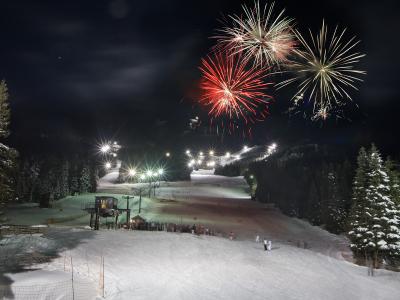
Winter is Government Camp's busiest season, and four ski areas lie within a few miles. Mount Hood Skibowl sits right on the south side of U.S. 26 and is known for one of the largest night-skiing operations in the United States, which makes it a favourite for after-work runs from Portland. Summit Pass, at the east end of the village, is a small, gentle hill suited to beginners, children and tubing. Six miles up the Timberline Highway, Timberline offers skiing in the shadow of its historic lodge and has the longest ski season in the country, with lifts on the Palmer Snowfield often running into summer. Mount Hood Meadows, the largest resort on the mountain, is reached via Oregon Route 35 on the mountain's southeastern side and offers the most varied terrain.
Cross-country skiers and snowshoers have plenty of options too. Oregon's Sno-Park system keeps trailheads plowed along the highway, and the unplowed road to Trillium Lake becomes one of the most popular snowshoe and Nordic routes on the mountain.
Summer on the Mountain
When the snow melts, Government Camp turns into a hiking and biking base. The Mirror Lake Trail starts just west of the village and leads through forest to a small lake that reflects the summit of Mount Hood, with an optional climb to the ridge of Tom, Dick and Harry Mountain. Trillium Lake, a few miles southeast, is the classic photo spot for the mountain and has a lakeside campground, a loop trail and calm water for canoes, kayaks and paddleboards. Above town, the Pacific Crest Trail passes Timberline Lodge, and Skibowl runs a summer adventure park with an alpine slide and other activities.
Getting There and Around
Government Camp is about an hour and a half's drive from Portland via U.S. 26 through Sandy and the communities of the Mount Hood Corridor. In winter, conditions can change quickly: carry chains or traction tires, check road reports before setting out, and be aware that Oregon requires a Sno-Park permit for parking at designated winter recreation areas from November through April. Many trailheads also require a Forest Service recreation pass in summer. The village is compact enough to explore on foot, but you will need a car or a shuttle to reach Timberline and Mount Hood Meadows.
Practical Tips
Weekends in ski season are busy, and parking at the ski areas and Sno-Parks fills early, so arrive early or visit midweek. Lodging ranges from Timberline Lodge itself to cabins, condominiums and small inns in the village, and many book up well ahead for winter holidays. Combine a stay with the Mount Hood Scenic Byway, which links Government Camp with Hood River and the Columbia River Gorge in a loop around the mountain.
Before driving up in winter, read our Oregon winter driving guide to chain laws and road conditions.
Best time to visit
December through March for skiing and snowshoeing; July through September for hiking, lakes and wildflowers.
What to see in Government Camp
Our picks first.
Mount Hood Skibowl
Recreation & Sports · Mountains
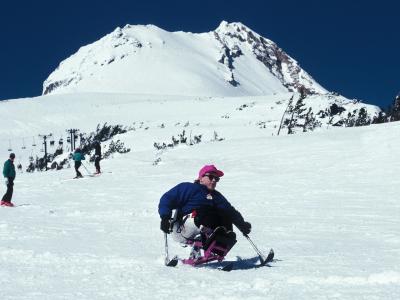
Mount Hood Meadows
Recreation & Sports · Mountains
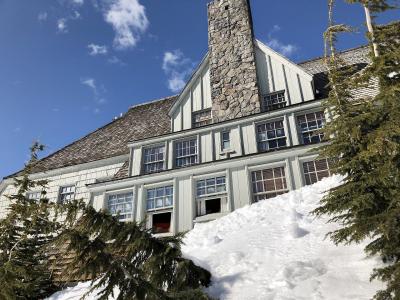
Timberline Lodge
History & Heritage · Recreation & Sports
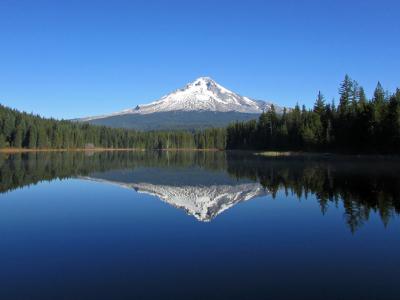
Trillium Lake
Hiking Trails · Lakes & Rivers
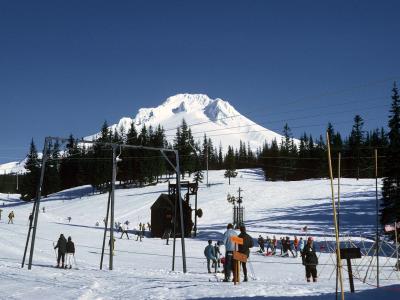
Summit Pass
History & Heritage · Recreation & Sports
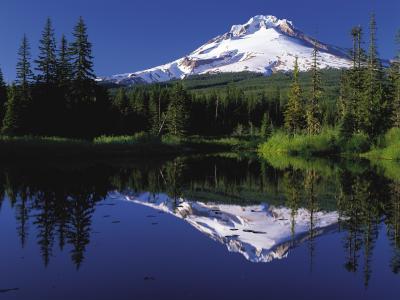
Mirror Lake Trail
Hiking Trails · Lakes & Rivers
Government Camp by interest
The same sights, grouped by what you came for.
Did you know?
Checked facts about Government Camp, each with its source.
-
Name Origin
Government Camp is named for abandoned Army wagons
Four years after Sam Barlow found his wagon route around Mount Hood in 1845, a U.S. Army regiment of Mounted Riflemen following it late in the season abandoned wagons and supplies here, so travelers began calling the spot "Government Camp." A later attempt to rename the village Pompeii never caught on.
Source: Mt. Hood Cultural Center & Museum -
History
President Roosevelt dedicated Timberline Lodge above Government Camp
Timberline Lodge, just above Government Camp, was built in about 18 months by more than 500 Works Progress Administration workers. President Franklin D. Roosevelt dedicated it on September 28, 1937, calling it a "monument to the skill and faithful performance of workers."
Source: Timberline Lodge -
Sports
Mount Hood's Palmer lift has offered summer skiing since 1978
The Palmer chairlift at Timberline, above Government Camp, opened in 1978 and made summer skiing possible on the Palmer Snowfield. Timberline says it is the only lift-accessed summer snow experience of its kind in North America.
Source: Timberline Lodge
Planning a visit to Government Camp
Good to know
- Currency
- USD
- Language
- English