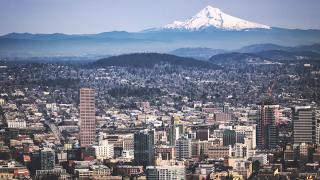
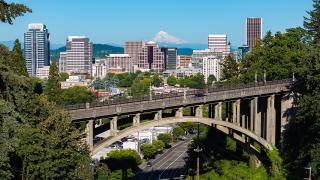
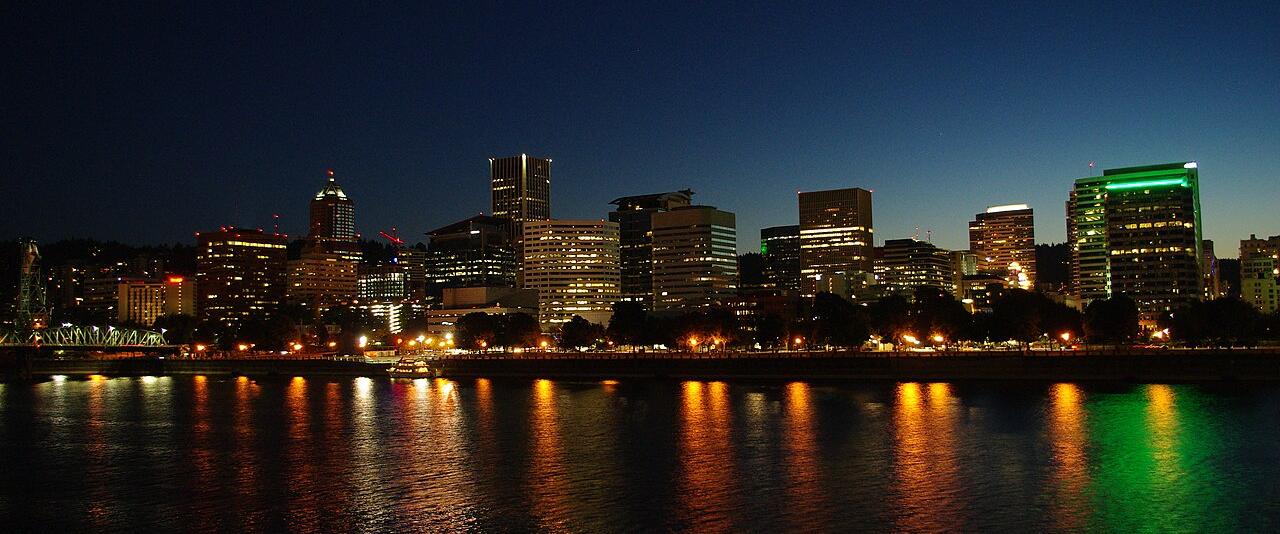
Portland likes to think of itself as the most progressive city in America: bikes and bookshops, food carts and rose gardens, "Keep Portland Weird" on the bumper stickers. Its history is less comfortable. It was the biggest city in a state whose constitution banned Black people from living there. In the 1920s the Ku Klux Klan helped choose its governor, a flood wiped out its Black community's largest neighbourhood, and later the city bulldozed much of what was left for a stadium and a freeway. Its most famous dark attraction, the "Shanghai tunnels", turns out to be mostly legend.
Most of these chapters left something behind you can still find: a marker at a racetrack where a city once stood, a garden on the edge of Old Town Chinatown, a cemetery with graves under the pavement. This guide goes through them in order, from the 1840s to the present, and tells you where to see each one.
1844–1926: A State That Banned Black People
Oregon's white settlers wanted to keep the territory free of slavery and free of Black people. In 1844 the provisional government ordered free Black residents to leave, on pain of whipping; the whipping clause was dropped within months, and no one is known to have been flogged. In 1849 a new law barred Black people from entering the territory. Its only known victim was Jacob Vanderpool, a West Indian man living in Oregon City, who was expelled in 1851.
In 1857 Oregon's voters approved a constitution for the new state. In the same vote they rejected slavery, by 7,727 to 2,645, and approved an exclusion clause by 8,640 to 1,081: no Black person not already living in Oregon could enter, live, own property or make contracts there. It was never enforced through a statute, but it kept Oregon overwhelmingly white for decades. Voters repealed the clause in 1926, and the last of the racist language was removed from the constitution only in 2002.
 The title page of the original 1857 Oregon constitution. Image: Oregon Constitutional Convention, Public domain, via Wikimedia Commons.
Where to see it today: the Oregon Historical Society museum, 1200 SW Park Avenue, covers the state's exclusion laws in its permanent exhibition.
The 1880s: Expelling the Chinese
By the 1880s Portland had a large Chinese community, most of them labouring men. Hostility grew with the economic slump. In February 1886 armed men drove Chinese mill workers out of Oregon City, and on the night of 1 March 1886 about 30 armed men forced about 180 Chinese residents out of Albina and East Portland across the river. No one was arrested.
 Portland's Chinatown in 1905. Image: Unknown authorUnknown author, Public domain, via Wikimedia Commons.
Where to see it today:
- Lan Su Chinese Garden, 239 NW Everett Street, built by craftsmen from Suzhou and opened in 2000, in the heart of the historic Chinatown.
- The Portland Chinatown Museum, 127 NW Third Avenue, tells the community's story.
- Lone Fir Cemetery, in southeast Portland. Part of the cemetery where Chinese people were buried was paved over in 1947 and their graves were removed. More graves were found there in 2004.
 Lan Su Chinese Garden in Old Town Chinatown. Image: Daderot, CC0, via Wikimedia Commons.
The "Shanghai Tunnels"
Portland's best-known dark legend is that sailors were drugged in waterfront bars, dropped through trapdoors into tunnels under Old Town, and carried off to ships bound for Asia. Shanghaiing was real: 19th-century "crimps" such as Joseph "Bunco" Kelly and Jim Turk made a living supplying sailors to ships, by fair means and foul. Kelly claimed to have shanghaied about 2,000 men, and later went to prison for murder.
But historians have found no evidence that the basements under Old Town were used for kidnapping. The tunnels connected cellars and moved goods. The tunnel legend took off in the 1960s and 1970s, with newspaper stories and tour guides.
 Old Town Pizza on NW Davis Street, where tunnel tours begin. Image: Michael Barera, CC BY-SA 4.0, via Wikimedia Commons.
Where to see it today: tours of the basements start under Old Town Pizza & Brewing, 226 NW Davis Street. Enjoy them as a ghost story.
The 1920s: The Klan's Oregon
In the early 1920s Oregon had one of the strongest Ku Klux Klan movements outside the South, with tens of thousands of members, most of them in Portland. Its main targets were Catholics and immigrants. Klansmen were inducted on Mount Scott and burned crosses on Mount Tabor, and in 1921 the city's police chief and district attorney posed for a newspaper photograph with robed Klan leaders.
 Portland's police chief, district attorney and other officials with Klan leaders, from a 1921 newspaper. Image: Portland Telegram - August 2, 1921, Public domain, via Wikimedia Commons.
In 1922 the Klan backed Walter Pierce for governor, and he won. The same year Oregon voters passed a law forcing all children to attend public schools, aimed at shutting Catholic schools. The US Supreme Court struck it down unanimously in 1925.
Where to see it today: there are no markers. Mount Tabor, the volcano park in southeast Portland, is a favourite place to watch the sunset.
1942: The Assembly Center
After Pearl Harbor, the federal government ordered everyone of Japanese descent removed from the West Coast. In Portland they were first held at the Pacific International Livestock Exposition grounds in north Portland, from May to September 1942. More than 3,600 people lived in converted animal stalls before being sent to camps in Idaho, Wyoming and California.
 Japanese Americans practising judo at the Portland Assembly Center in 1942. Image: U.S. Signal Corps, Public domain, via Wikimedia Commons.
Where to see it today:
- The Portland Expo Center, on the same site; a memorial of torii-style gates by Valerie Otani stands at its MAX station.
- The Japanese American Historical Plaza in Tom McCall Waterfront Park, north of the Burnside Bridge, on the site of the old Japantown.
- The Japanese American Museum of Oregon, 411 NW Flanders Street, open Wednesday to Sunday.
30 May 1948: The Vanport Flood
During the Second World War, the Kaiser shipyards brought tens of thousands of workers to Portland, among them thousands of Black families from the South. With almost nowhere else they were allowed to live, many settled in Vanport, a housing project built in 1942 on the Columbia River floodplain. At its peak it had about 40,000 residents, making it Oregon's second-largest city.
On the morning of 30 May 1948, with the river in flood, the housing authority told residents the dikes were safe. That afternoon a railroad embankment gave way, and within hours the whole city was under water. Fifteen people died, and about 18,000 lost their homes, about a third of them Black. Vanport was never rebuilt.
 Vanport under water after the flood of 30 May 1948. Image: Unknown photographer; published by Camera Art Studio (Portland, Or.), Public domain, via Wikimedia Commons.
Where to see it today: the site is now Delta Park and the Portland International Raceway. A marker, "Remembering Vanport", was installed just inside the raceway's main gate in 2021. Vanport's college survived the flood and became Portland State University.
The 1950s–1970s: Albina
Most of the Black families who left Vanport moved into Albina, in north and northeast Portland, because estate agents and banks kept them out of almost everywhere else; the realty board had declared selling to Black buyers in white neighbourhoods "unethical" in 1919. By 1960 about 80% of Black Portlanders lived there.
Then the city began to clear it. The Memorial Coliseum, opened in 1961, was built on the oldest part of the neighbourhood, and Interstate 5 cut through it in the 1960s. In the early 1970s the city cleared blocks for an expansion of Emanuel Hospital, which was cancelled after the land had been cleared; much of it stayed empty for decades. More than 1,000 homes were lost in all.
 The Memorial Coliseum under construction in 1960, on the site of old Albina. Image: Unknown authorUnknown author, Public domain, via Wikimedia Commons.
Where to see it today:
- The Memorial Coliseum in the Rose Quarter.
- North Williams Avenue, where the Historic Black Williams Project has set history panels and artwork into the sidewalk.
- The empty and rebuilt blocks around Legacy Emanuel hospital.
The 1950s: Vice and the City
In the 1950s a vice boss named Jim Elkins ran gambling and prostitution in Portland and kept secret recordings of the officials he dealt with. In 1956 two Oregonian reporters exposed links between the city's vice trade, its police and the Teamsters union; they won a Pulitzer Prize in 1957, and the US Senate held hearings. The district attorney, the police chief and the new mayor were all charged; the mayor and the district attorney were acquitted.
Earlier, Portland's first woman mayor, Dorothy McCullough Lee (1949–53), had campaigned against slot machines and gambling halls and earned the nickname "No Sin Lee".
 Dorothy McCullough Lee, Portland's first woman mayor, in 1951. Image: Daan Noske / Anefo, CC0, via Wikimedia Commons.
Where to see it today: there are no markers.
2020: One Hundred Nights
After the murder of George Floyd in Minneapolis in May 2020, protesters gathered every night for more than 100 nights outside the Justice Center, which houses Portland's police headquarters and county jail, and the federal courthouse across the street. In July the federal government sent in its own officers, who used tear gas and detained protesters using unmarked vans, drawing national criticism. They withdrew at the end of the month.
 The federal courthouse behind its fence in July 2020. Image: Calvin Hodgson from Portland, United States, CC BY-SA 2.0, via Wikimedia Commons.
Where to see it today: Lownsdale and Chapman squares, the two small parks between the Justice Center and the courthouse on SW Third Avenue.
Today's Shadows
- Homelessness and drugs. In 2020 Oregon voters decriminalised the possession of small amounts of drugs. As fentanyl spread, the state reversed course, and since September 2024 possession has been a crime again. Homelessness remains visible downtown and in Old Town.
- Camping bans. In 2024 the US Supreme Court, in a case from Grants Pass, Oregon, allowed cities to fine people for sleeping outside.
How to visit: Old Town is fine by day; at night, keep to busy streets. Don't photograph people living on the street.
How to See Dark Portland Respectfully
A self-guided walk, about 4 km. Start at the Oregon Historical Society on the Park Blocks, then walk down to Lownsdale and Chapman squares. Continue to the waterfront and north through Tom McCall Waterfront Park to the Japanese American Historical Plaza. Turn into Old Town for Old Town Pizza, the Chinatown Museum and Lan Su Chinese Garden, and finish at the Japanese American Museum of Oregon on NW Flanders.
Further afield:
- Vanport at Delta Park and the Portland International Raceway.
- Albina: the Memorial Coliseum and North Williams Avenue.
- The Expo Center and its MAX station memorial.
- Lone Fir Cemetery in southeast Portland.
Dates to know:
- 30 May: the anniversary of the Vanport flood.
- 19 February: the Day of Remembrance for Japanese American incarceration.
A few ground rules. Vanport and Albina are not just history: many families still remember them. At the Japanese American Historical Plaza and the cemeteries, keep your voice down and don't climb on the memorials.