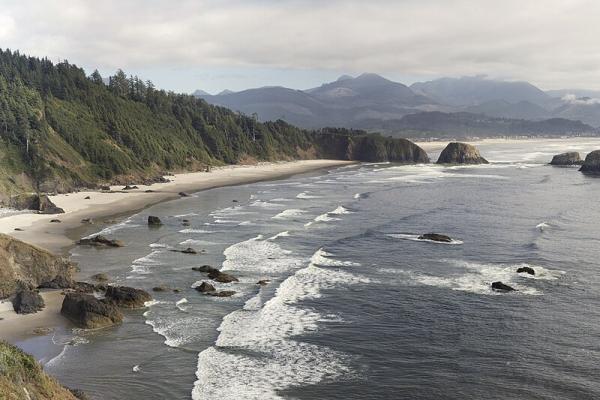

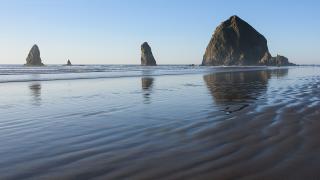
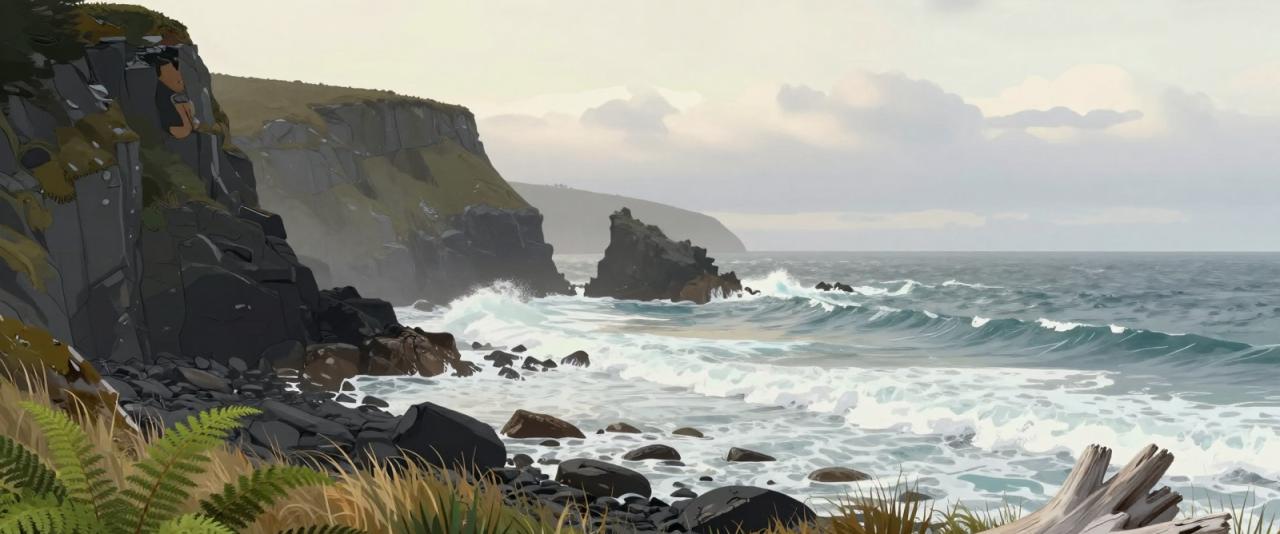
The Oregon coast runs about 363 miles along US 101 from Astoria to Brookings, and every beach on it is public. The best-known stops are Cannon Beach and Haystack Rock on the north coast, Pacific City, Newport and Cape Perpetua in the middle, and the sea stacks of Bandon and the Samuel H. Boardman corridor in the south.
- From Portland: Cannon Beach is about 80 miles, roughly 1.5 hours by car via US 26. Newport is about 2.5 hours.
- Full drive: Astoria to Brookings is about 340 miles on US 101. Allow at least three days to stop properly, more with tide pooling.
- Water temperature: In the 50s°F all year. Bring layers and a windproof jacket even in August.
- Rules: Adults can drink on most beaches and build small fires in many places, and dogs are welcome under control. See our Oregon laws and etiquette guide for the details town by town.
Every Beach Is a Public Beach
Oregon has about 363 miles of coastline, and almost all of its beaches are open to everyone. The 1967 Beach Bill, championed by Governor Tom McCall, protected public use of the dry sand as well as the wet, and the state treats its beaches as a public recreation area. You can walk for miles without meeting a "private beach" sign, and access points, state parks and waysides are scattered all along US 101.
The water is cold, typically in the 50s Fahrenheit even in summer, so most visitors come to walk, explore tide pools, fly kites and watch the surf rather than to swim. Pack a windproof jacket for any season.
The North Coast
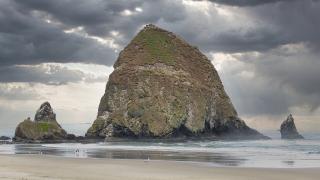
Cannon Beach is the classic first stop. Haystack Rock, a basalt sea stack about 235 feet high, stands at the edge of the sand, and at low tide you can walk to its base to see tide pools with sea stars and anemones. In spring and summer, tufted puffins nest on the rock; volunteers with the Haystack Rock Awareness Program often set up spotting scopes on the beach. Climbing the rock is not allowed.
Just north, Ecola State Park has viewpoints over the coast and Indian Beach, a cove popular with surfers. South of town, Oswald West State Park has Short Sand Beach, reached by a short forest trail, and the Neahkahnie Mountain trail above it.
The Central Coast
At Pacific City, Cape Kiwanda's sandstone headland and a huge dune rise over a beach where the town's dory fleet launches boats straight into the surf. Climbing the dune is a local tradition; stay behind the fences on the cliffs, which are unstable.
Around Newport, Nye Beach is the walkable town beach, and Yaquina Head's Cobble Beach has some of the coast's best tide pools. Farther south, Yachats and Cape Perpetua offer basalt shorelines where waves surge through Thor's Well and the Devil's Churn; watch them from the viewpoints, never from the wet rocks.
Between Florence and Coos Bay, the Oregon Dunes National Recreation Area stretches for about 40 miles. Some dune areas are open to off-road vehicles and others are for hikers only; the John Dellenback Dunes Trail is a good walk-in introduction.
The South Coast
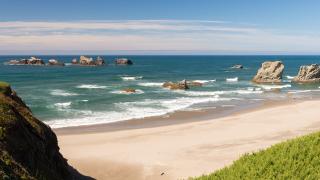
Bandon has some of the most striking sea stacks on the coast. From the Face Rock viewpoint and Coquille Point, stairs lead down to a beach scattered with rock formations, and low tide opens up long stretches to explore.
North of Brookings, the Samuel H. Boardman State Scenic Corridor follows about 12 miles of cliffs, arches and small coves. Short trails from US 101 pullouts lead to Natural Bridges viewpoint, Secret Beach and Whaleshead Beach. Trails can be steep and muddy, so wear proper shoes.
Tide Pools and Safety
The best tide pooling happens at minus tides, which fall in the early morning in late spring and summer. Check a tide table before you go and arrive an hour or so before low tide. Step on bare rock, not on living things; do not pry animals off rocks; and turn rocks back the way you found them. Some areas are marine gardens or marine reserves with stricter rules, posted at the access points.
The Oregon coast's most serious hazard is the sneaker wave, a larger-than-usual wave that runs far up the beach without warning. Never turn your back on the ocean, keep children close at the water's edge, and stay off drift logs, which waves can lift and roll. Check the incoming tide before walking around headlands, as high water can cut off your route back. Rip currents are common, and lifeguards are rare.
When to Go: The Coast by Season
- Summer (July to September): The driest, busiest months, with morning fog that often burns off by afternoon. Book lodging early for weekends. September is often the best month on the coast: warm, calm days with the crowds gone.
- Fall (October and November): Quieter, with mild days between the first storms. Lodging prices drop after mid-October.
- Winter (December to February): Storm-watching season. Big swells crash on the headlands at Cape Perpetua, Shore Acres near Coos Bay and Depoe Bay, and many lodges have storm-view rooms. Gray whales migrate south from mid-December into January, and volunteers staff viewpoints along the coast during the Whale Watching Spoken Here week after Christmas.
- Spring (March to May): The whales head back north, often close to shore with calves, and the first minus tides of the year open up the tide pools.
Chowder and Comfort
After a cold walk, clam chowder is the coast's default lunch, served in casual restaurants from Astoria to Brookings. Look for places that use local seafood: Dungeness crab, rockfish, albacore tuna and razor clams are all regional catches, and many towns have fish markets that cook to order. If you want to gather clams or crab yourself, check the Oregon Department of Fish and Wildlife's licence requirements and the state's shellfish safety closures first.