Where Sisters Is
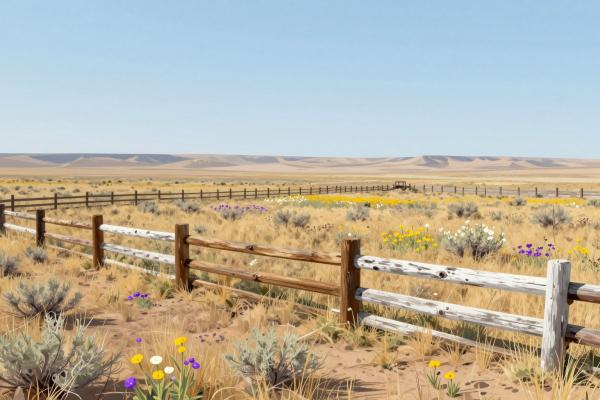
Sisters is a small town of a few thousand people on the dry, east side of the Oregon Cascades, about 20 miles northwest of Bend. It sits at roughly 3,200 feet in open ponderosa pine forest, where the mountains give way to the juniper and sagebrush of the high desert. The town takes its name from the Three Sisters, a trio of volcanic peaks to the southwest, North, Middle and South Sister, each a little over 10,000 feet high.
Three highways meet here: US 20 and Oregon 126, which cross the Cascades over Santiam Pass, and the scenic Oregon 242 over McKenzie Pass, which is closed by snow for much of the year. Summers are sunny and dry with cool nights; winters bring snow but plenty of sunshine.
Day 1 Morning: Downtown
Start in downtown Sisters, where nearly every building has a false-front, Old West style facade; the look is set by local design rules rather than surviving from frontier days. The town was settled by homesteaders and ranchers in the late 1800s and was platted in the early 1900s as a supply stop for ranches and sawmills. Today the few blocks along Cascade Avenue hold galleries, quilt and gift shops, outdoor outfitters, bakeries and cafes. Sisters Bakery is a long-standing breakfast stop, and the town has its own coffee roaster and brewpubs.
Day 1 Afternoon: The Metolius River
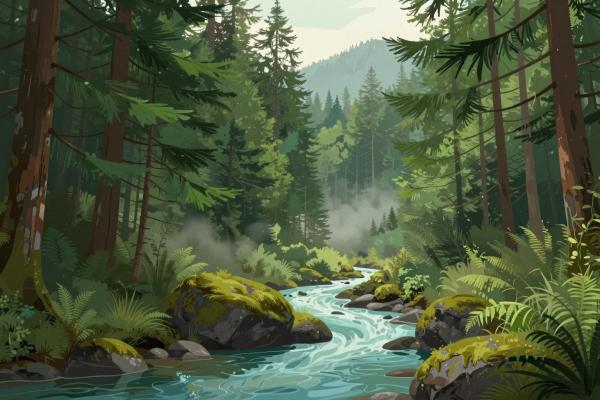
Drive about 15 miles northwest to the Head of the Metolius, where a full-sized river emerges from springs at the base of Black Butte. A short paved path leads to a viewpoint with Mount Jefferson framed behind it. Downstream, the small community of Camp Sherman has a historic general store, and the Metolius River Trail follows the clear, cold water through pine forest past a fish hatchery. It is flat and easy, and you can walk as far as you like. The Metolius is famous for fly fishing, with special regulations, so check rules before casting.
For a bigger outing, the trail up Black Butte, a symmetrical cinder cone, climbs about 1,500 feet in under two miles to a fire lookout with views of the Cascade peaks from Mount Hood to the Three Sisters.
Day 2 Morning: McKenzie Pass or Suttle Lake
If Highway 242 is open, usually from about late June to early November, drive west to McKenzie Pass. At the summit, the Dee Wright Observatory, a stone lookout built by the Civilian Conservation Corps in the 1930s, stands in the middle of a vast black lava field, with peak-finder windows pointing to more than a dozen mountains. A short interpretive trail crosses the lava. The road is narrow and winding, and vehicles over 35 feet long are prohibited.
When the pass is closed, head instead to Suttle Lake, about 13 miles northwest on US 20, where a trail of about 3.5 miles circles the lake through forest. Canoes and paddleboards can often be rented in summer.
Day 2 Afternoon: Closer to Town
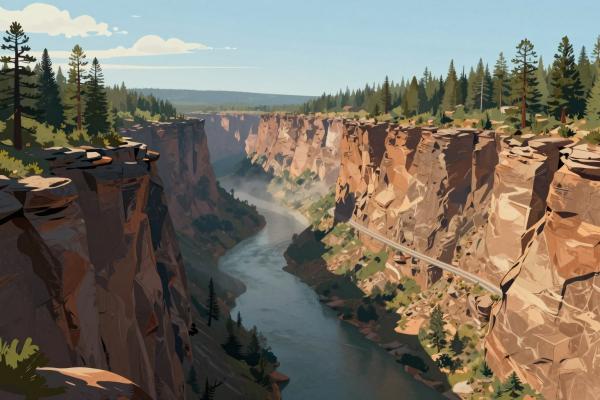
The Peterson Ridge Trail system starts at the edge of town and is popular with mountain bikers and walkers. Whychus Creek, which runs through Sisters, has trails and overlooks a few miles south. If you are heading to Bend, Smith Rock State Park, with its river canyon and climbing cliffs, is about half an hour northeast.
Annual Events
Sisters fills up for several annual events, so book lodging early if your dates overlap:
- Sisters Rodeo, held in June, a professional rodeo that has run since 1940.
- Sisters Outdoor Quilt Show, in July, when thousands of quilts are hung on buildings across town; it is billed as the largest outdoor quilt show in the world.
- Sisters Folk Festival, in September, with performances in venues around town.
- Sisters Harvest Faire, in October, an arts and crafts fair.
Practical Tips
Lodging ranges from small motels and cabins to resorts and national forest campgrounds in the Deschutes National Forest, especially around the Metolius and Suttle Lake. Many trailheads require a Northwest Forest Pass. Summer brings wildfire risk and occasional smoke; check fire restrictions and closures before you hike. At this elevation the sun is strong, nights can be near freezing even in summer, and water is scarce on many trails, so carry more than you think you need.