Newport at a Glance
Newport is the largest town on Oregon's central coast, set where the Yaquina River meets the Pacific. It divides neatly into three areas: the working Bayfront along Bay Boulevard, where the fishing fleet ties up; the older beach district of Nye Beach on the ocean side; and South Beach, across the arched Yaquina Bay Bridge, where the aquarium and marine science center are. Everything in this guide is within about 20 minutes' drive, which makes Newport an easy base for a family day or a long weekend.
Seal Rock at Low Tide
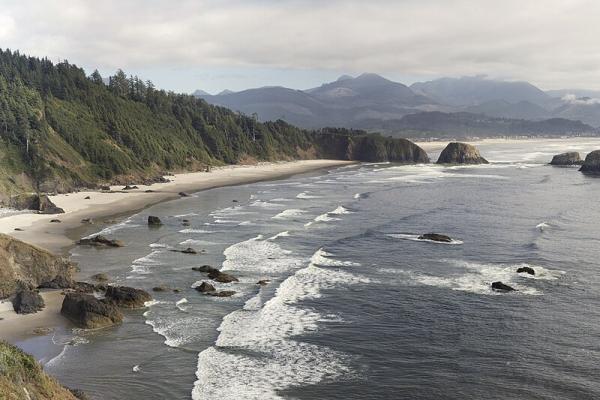
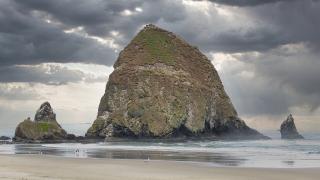
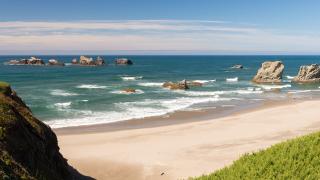
Seal Rock State Recreation Site lies about ten miles south of Newport on US 101. A short paved path leads from the parking area through shore pines to viewpoints over a line of jagged basalt rocks running out to sea, the remains of an old lava flow. Harbor seals and sea lions rest on the outer rocks, so bring binoculars.
From the viewpoints, a steeper path drops to the beach. At low tide, the rocks closest to shore expose tide pools with sea stars, anemones, mussels and small crabs. Check a tide table and aim to arrive an hour or so before low tide. The rocks are slippery, and incoming water can cut off outer rocks quickly, so keep an eye on the sea and on children. If the climb down is too much, the upper viewpoints still give a good look at the rocks and the wildlife.
Yaquina Head
Just north of town, the Yaquina Head Outstanding Natural Area combines Oregon's tallest lighthouse with some of the best tide pooling on the coast. Cobble Beach, reached by stairs, is covered in smooth black basalt cobbles, and Quarry Cove has paved paths that make tide pools accessible for strollers and wheelchairs. Harbor seals haul out on rocks close to shore, and in spring and summer the offshore rocks are crowded with nesting seabirds. The site charges a vehicle fee and keeps daytime hours, so go in the morning.
Sea Lions and the Bayfront
Bay Boulevard is Newport's working waterfront, with fish processors, charter offices and gift shops side by side. California sea lions often crowd onto floating docks in the bay, barking loudly enough to hear from the street; there are viewing spots along the boardwalk near the Port of Newport docks. The public fishing pier and docks are also popular for crabbing, and several Bayfront shops rent crab rings and sell bait. Check Oregon Department of Fish and Wildlife rules and shellfish safety notices first.
For food, the Bayfront is where you will find the town's best-known chowder at Mo's, a local institution, and fresh fish at markets and restaurants such as Local Ocean Seafoods, where you can see the day's catch before you order. Dungeness crab is the local specialty; the commercial season usually opens in winter, so it is freshest from then into spring. Kid-friendly fish and chips are easy to find, and many places have counter service if you want to eat on a bench overlooking the boats.
The Aquarium and the Marine Science Center
Across the bridge in South Beach, the Oregon Coast Aquarium is the main rainy-day attraction, with sea otters, seals, sea lions, a seabird aviary and walk-through tunnels beneath sharks and rays. Allow two to three hours. Nearby, Oregon State University's Hatfield Marine Science Center has a visitor center with exhibits on research and a touch tank. Check opening days before you go, since schedules vary by season.
Scenic Stops Along the Way
North of Newport, the Otter Crest Loop is a short detour off US 101 that climbs to Cape Foulweather, with a high viewpoint over the coast, and drops to Otter Rock, where the Devils Punchbowl is a collapsed sea cave that churns at high tide. At low tide, the beach below the Punchbowl has more tide pools.
South of town, US 101 runs close to the ocean past several waysides. Ona Beach, where Beaver Creek meets the sea, is a good place for children to splash in the creek mouth instead of the cold surf.
Whatever you do, follow the coast's basic rule: never turn your back on the ocean. Sneaker waves can surge far up the beach without warning, and drift logs can roll in shallow water.